






You type in what you need, open Google Maps, glance at a few options… and pick one.
No deep research. No long comparison.
Just a quick decision based on what shows up and what feels most trustworthy.
That’s exactly why Google Maps marketing matters.
Because if your business isn’t showing up in those top results or doesn’t look like the obvious choice when it does, you’re losing customers before you ever get the chance to win them.
What is Google Maps Marketing?
It’s driven by your Google Business Profile, but it’s influenced by a lot more than just filling out your information.
It’s about how your business appears online:
- Are you trusted?
- Are you active?
- Are you relevant to what someone is searching for?
Because today, customers don’t just find businesses, they filter them instantly.
How “Near Me” Searches Actually Work
When someone searches on Google Search or Google Maps, Google uses three main factors to decide what to show:
1. Proximity
How close your business is to the person searching
2. Relevance
How well your business matches what they’re looking for
3. Prominence
How strong your reputation and online presence are
But you can influence how relevant and prominent your business appears, and that’s where most of the opportunity lies.

How to Improve Your Google Maps Ranking (Without Ads)
Strong Google Maps marketing comes down to consistency, trust, and activity.
Here are the areas that make the biggest difference.
1️⃣ Keep Your Google Business Profile Fully Optimized
Your Google Business Profile is the foundation of your local visibility.
If it’s incomplete or outdated, it’s harder for Google to understand your business and harder for customers to trust it.
Take time to:
- Choose accurate categories
- Add clear service descriptions
- Keep hours updated
- Upload real photos of your business
These details might seem small, but they play a big role in how often you appear and how often you get chosen.
2️⃣ Focus on Your Reviews (Quality and Consistency)
Reviews are one of the strongest signals in Google Maps marketing.
They influence both:
- Where you rank
- Whether someone chooses you
It’s not just about having a lot of reviews it’s about having:
- A strong overall rating
- Recent activity
- Real, detailed feedback
A steady flow of reviews shows that your business is active and trusted.
3️⃣ Respond to Reviews Regularly
When businesses ignore reviews, it creates uncertainty.
When they respond, it builds confidence.
Replying to reviews both positive and negative shows:
- You’re engaged
- You care about customer experience
- You’re paying attention
It also signals to Google that your business is active, which can support your visibility over time.
4️⃣ Make Sure Your Business Information Is Consistent Everywhere
Your business information, name, address, and phone number should match across all platforms.
Even small inconsistencies can:
- Confuse search engines
- Lower trust
- Impact your ability to rank
Consistency helps reinforce your legitimacy and improves how search engines interpret your business.
5️⃣ Stay Active on Your Profile
Google favors businesses that look active and up to date.
Using features like posts, updates, and new photos helps show that your business is still operating and engaging with customers.
This doesn’t need to be complicated.
Even simple updates like sharing recent work or answering common questions can make a difference.
6️⃣ Use Real Photos to Build Trust
Photos are often one of the first things customers look at.
They help people quickly decide:
“Does this business feel trustworthy?”
Sharing real images of your team, your work, or your location can:
- Increase engagement
- Improve click-through rates
- Help customers feel more confident choosing you
How AI Is Changing Local Search
It’s no longer just about matching keywords; it’s about interpreting trust signals.
AI systems are increasingly analyzing:
- Reviews
- Activity levels
- Consistency across platforms
This means your Google Maps marketing strategy isn’t just about showing up, it’s about giving enough signals for search engines to recommend you.
If those signals are weak or inconsistent, your business may be overlooked entirely.
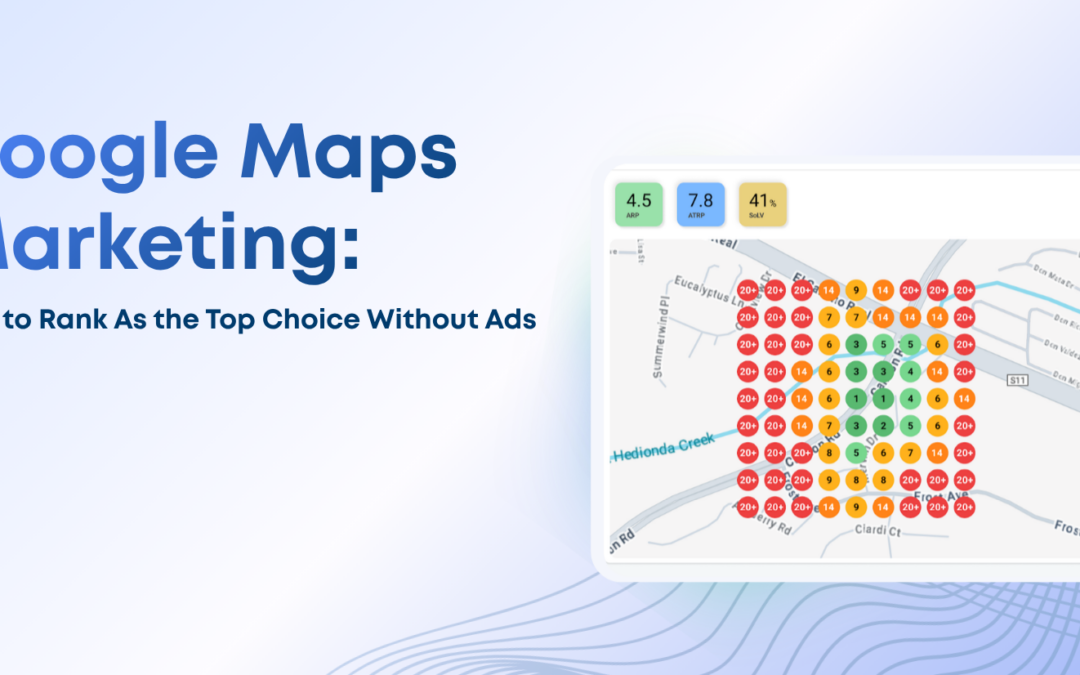
Why Your Rankings Vary by Location
In reality, your position can change depending on where someone is searching.
You might appear near the top in one area but much lower in another.
That’s because results are personalized based on location, especially for “near me” searches.
How to Track Your Rankings Zip Code By Zip Code
That’s where geo-grid tracking comes in.
These tools show how your business ranks across different areas, often down to specific zip codes or neighborhoods.
Instead of guessing, you can see:
- Where you’re performing well
- Where you’re not showing up
- How competitors compare
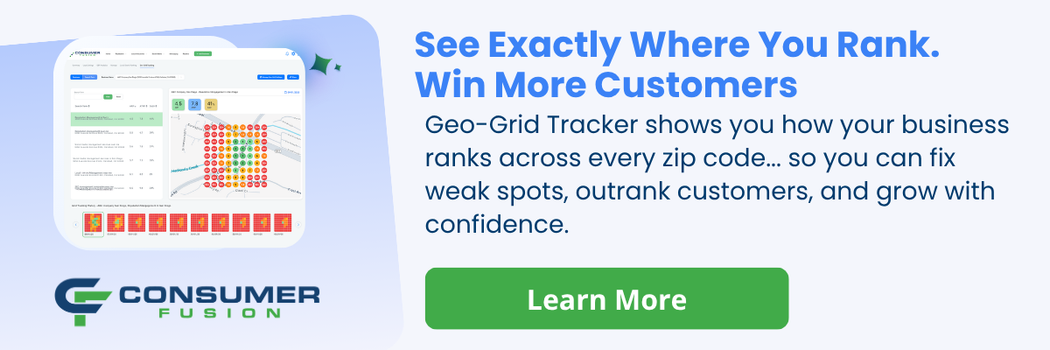
Tools like Consumer Fusions GEO Grid Tracker and Keyword ranking can help you visualize this data.
Why Geo-Grid Tracking Matters
But in reality, small gaps in visibility can have a big impact.
Geo-grid tracking helps you:
- Identify underperforming areas
- Adjust your strategy
- Focus on the locations that matter most
It gives you a clearer picture of how your Google Maps marketing efforts are actually performing.

The Bigger Picture
But often, that’s not the real issue. Customers are already searching. The challenge is making sure that when they find you:
- You show up
- You look credible
- You stand out
Because when those pieces are in place, everything else becomes easier.
Final Thoughts
It’s about building a consistent, trustworthy presence over time.
When you focus on:
- Accurate information
- Strong reviews
- Ongoing activity
- Clear visibility across locations
You don’t just improve your rankings.
You improve your chances of being chosen.
And in local search, that’s what matters most.



Start Driving Real Results For Your Brand Today
Simplify Your Reputation Management
Learn why so many brands trust us for Reputation Management